
Camille Saint-Saëns's *Oratorio de Noël*
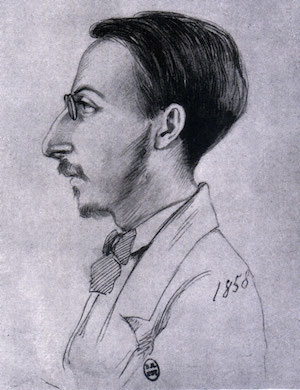
Camille Saint-Saëns was just 23 years old when, in 1858, he wrote his *Oratorio de Noël* in just two weeks—today one of the most popular and well-known Christmas oratorios. As part of a choral workshop, students rehearsed and performed a newly edited version under the direction of Christina M. Stahl.
Grades
The score of the *Oratorio de Noël* was republished in 2021 by Christina M. Stahl through Bärenreiter. You can find the sheet music...
A Rapid Rise to Success
Saint-Saëns was what we would call a “child prodigy” today: At just three years and five months old, he wrote his first piano piece, and at age 13, he began studying organ and composition at the Conservatoire National de Musique in Paris. From then on, his career took off rapidly: Just four years later, at age 17, he landed his first organist position at Saint-Séverin, and in 1854 he moved to the Église Saint-Merri. At the age of 23, Saint-Saëns then moved to the Église Sainte-Marie-Madeleine, thereby securing the most prestigious organist position in Paris.
Please confirm video activation.
After activation, cookies will be set and data is sent to YouTube (Google).
To the Google Privacy Policy
Video: Christina M. Stahl and students from the Institute of Music discuss the Choir Workshop project. (Camera & Editing: Kristin Häring and Bennet Seiger)
The Project
As part of a choral workshop, the newly edited version was developed and rehearsed by (former) students of the Institute of Music at TU Dortmund University under the direction of Christina M. Stahl. In addition to learning about the methods of musicological editing, the workshop also addressed historically informed performance practice. In Saint-Saëns’ time, it was customary to pronounce the Latin texts in the respective national language. This results in a significant change in the flow of the text, the timbre, and even the rhythm. The French pronunciation of liturgical Latin—also known as “Gallican”—was intentionally incorporated into the music by Saint-Saëns as a deliberate sonic element. Through the active rehearsal of the work, theory and practice were interwoven—a unique and special experience for all participants. The choir workshop culminated in the (world) premiere of the newly edited version. Christina M. Stahl conducted an ensemble and a choir of (former) music students from TU Dortmund University at St. Reinoldi Church in Dortmund.