
Field Trips at the Institute
As Mark Twain once said, “You have to travel to learn.” With this in mind, it has become a popular tradition at the Institute of Music and Musicology to offer field trips—including during Pentecost week—in conjunction with the seminars held that semester. After all, where better to learn about Saint-Saëns’ life and work than in Paris, and what better way to get a sense of the world’s oldest musical instrument than to simply go there and see and hear it for yourself? The travel enthusiasm of Dortmund’s music faculty has already taken students to Paris, Naples, and Venice, among other places.
-
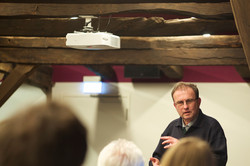
Field Trip to Blaubeuren (2020; Led by: Prof. Dr. Martin Ebeling) -
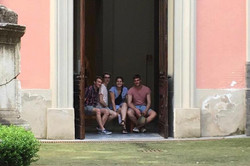
Field Trip to Naples (2019; Led by Prof. Dr. Günther Rötter) -
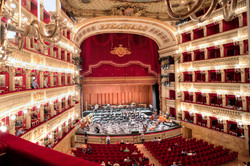
Field Trip to Naples (2019; Led by Prof. Dr. Günther Rötter) -
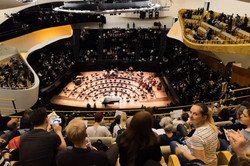
Field Trip to Paris (2019; Led by Prof. Dr. Michael Stegemann) -
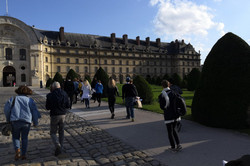
Field Trip to Paris (2019; Led by Prof. Dr. Michael Stegemann) -
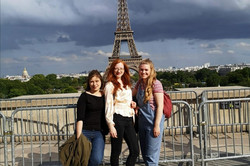
Field Trip to Paris (2019; Led by Prof. Dr. Michael Stegemann) -
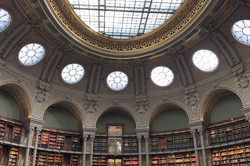
Field Trip to Paris (2023; Led by Prof. Dr. Michael Stegemann) -
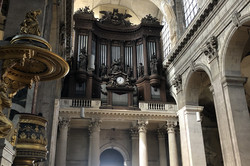
Field Trip to Paris (2023; Led by Prof. Dr. Michael Stegemann)




From Krakow to Paris via Gohrisch
Since the pandemic began, students have been documenting their field trips themselves. For example, as part of the “Music Journalism and Music Education” program, they post to their online magazine terzwerk or share short Reels on our Instagram channel. Have fun exploring!
Gohrisch 2024 – A page from the terzwerk editorial team
Krakow 2024 – A Reel by Vincent Klapfenberger
Paris 2023 – A text by Teresa Gehrung Rodriguez
Blaubeuren
A diverse group consisting of seven students, one senior student, and Prof. Dr. Rötter set off for Blaubeuren at the end of February under the expert guidance of Mr. apl. Prof. Dr. Ebeling. On the way, they stopped in Würzburg, where—after enjoying a hot drink and “Germany’s best pretzels”—they visited the exhibition “MUS-IC-ON! Sounds of Antiquity” at the Martin von Wagner Museum. There, the group was able not only to admire originals and replicas of ancient musical instruments but also to play them themselves, much to everyone’s delight.
Upon arriving in Blaubeuren, the group first thoroughly sampled the local cuisine before heading to the UrMu (Blaubeuren Museum of Prehistory) on Saturday morning. There, they attended lectures by Dr. Susanne Münzel, who discovered the world’s oldest flutes at the Geißenklösterle, Anna Friederike Potengowski, a flutist who researches how these flutes were played, and Prof. Martin Ebeling himself, who presented a comprehensive introduction to his research in musical archaeology. The day was rounded off with a concert by Anna Friederike Potengowski at the Stadtkirche in Blaubeuren, where the various flutes and their playing techniques were impressively brought to life.
On Sunday, the first item on the agenda was a tour of the sites where the flutes were found:
the Geißenklösterle Cave, the Hohle Fels Cave, and the Sirgenstein Cave. However, due to the presence of bats, only the latter could be entered from the inside. Afterward, we began our journey home, stopping in Kiedrich along the way to visit the organ at St. Valentin and even play it ourselves. This is the oldest playable organ in Hesse and one of the oldest functioning organs in the world. This unique musical experience perfectly rounded out the very enjoyable, culinary, and above all, educational excursion.

Paris
The Eiffel Tower, the Champs-Élysées, and the Arc de Triomphe—anyone can visit these tourist hotspots in Paris. But if you’re a musician who wants to truly experience Paris, you’ll go there with Prof. Dr. Stegemann, Alexander Gurdon, and Klaus Oehl.
This year’s musical program included, among other things, Shostakovich at the Philharmonie de Paris and Poulenc at the Hôtel des Invalides. Of course, a visit to the Opéra Garnier was also a must. The absolute highlights, however, were the places a “regular” tourist wouldn’t normally get to see: Prof. Stegemann arranged a visit to the music archive at the National Library of Paris. And it wasn’t just any visit: The students were offered the unique opportunity to hold original manuscripts by Saint-Saëns, Chopin, and Stravinsky in their hands and discover the composers’ corrections, doodles, and wine and coffee stains.
For organ student Vinzenz Laarmann in particular, the dream of many organists came true: under the guidance of Daniel Roth, he was allowed to play the famous Cavaillé-Coll organ at Saint-Sulpice. As an organist, you certainly don’t get an opportunity like that very often.
By the way, on an excursion with Prof. Dr. Stegemann, you can safely skip your workout—when he enthusiastically guides you through “his” city, you’ll easily rack up over 20,000 steps a day with him ;)
Gohrisch - Shostakovich Days
Special Feature on terzwerk.de
Last year, a delegation of students from the Institute of Music and Musicology took a closer look at the 10th Shostakovich Days in Gohrisch. Why do the musicians perform there without pay? Where are the world premieres of Shostakovich works coming from in 2019? What does the famous Mahlerweg sound like? In a special feature on terzwerk.de, they explored these questions—and sometimes found answers they weren’t even looking for. You can read all about it at:
Naples: The Italian "Dolce Vital"—Sun, Wine, and Music
For five days, Italy’s metropolis showed its sunniest side: With temperatures of 30 degrees in the shade, we were able to visit Pompeii, climb Mount Vesuvius, and enjoy the blue sea on the beach at Ischia.
But our excursion, led by Prof. Dr. Günther Rötter, was more than just a vacation: The focus, of course, was on music! At the Conservatory of Music, we were able to experience the daily lives of the music students there.
In terms of content, the focus was primarily on instrument making in Naples: The conservatory’s historical instrument collection impressively demonstrated the long tradition of masterful instrument making in Naples.
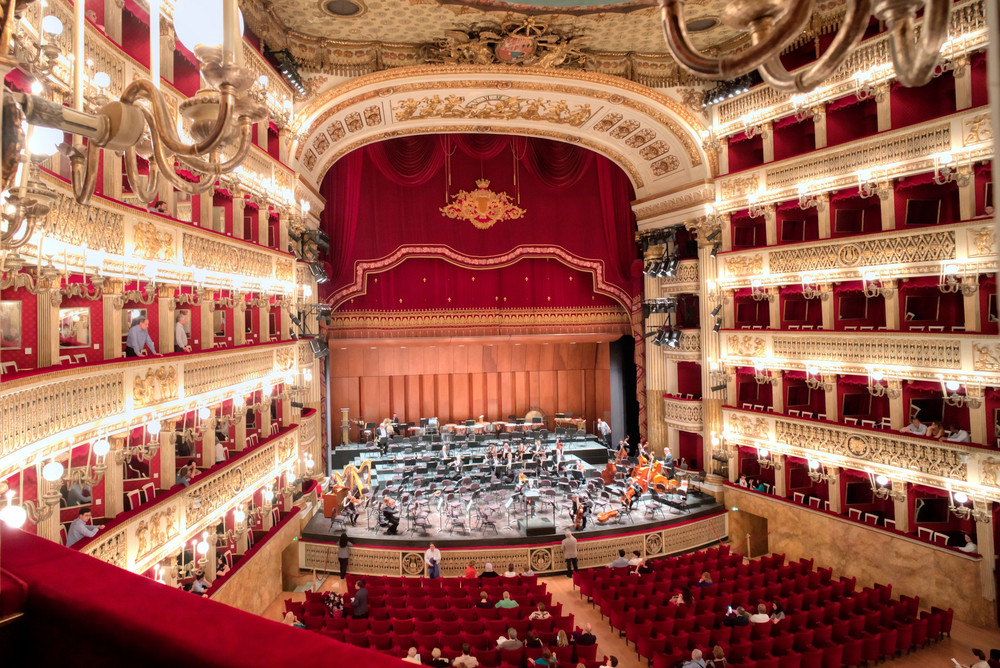
At the Teatro di San Carlo, we were not only able to see newer instruments but also hear them during a performance of Mahler’s Sixth Symphony.
In addition to all these wonderful and exciting experiences, there was, of course, plenty of time for a glass or two of wine on the hotel’s rooftop terrace and long walks on the beach under the Italian sun.
Denmark: Barbecue and Body Percussion
A small delegation from the institute, consisting of 16 students and three faculty members, had the honor of visiting University College Zealand in Vordingborg from May 17 to 19.
A very fruitful and creative exchange took place between our students and their peers in the “International Elementary School Teaching” program. In addition to lectures on the international school system and teacher training, there was also a practical component: We had the pleasure of planning joint workshops with various artistic and aesthetic focuses for a group of students—including theater, body percussion, dance, and more.
The particular challenge was that the students were completely unfamiliar with the student body and their learning needs, and that the workshops had to be conducted in English. Fifty Danish teenagers finally came to the college on the third day of our field trip to participate in the workshops. The students also had the opportunity to observe the other workshops using a set of criteria.
Hospitality Without Limits
On our last afternoon at the college, we held a final reflection session, followed by a big farewell barbecue together. Throughout our entire stay, we were treated to excellent hospitality—the hospitality of our Danish hosts knew no bounds. We spent the last two days in wonderful Copenhagen, taking in many cultural sights and, of course, celebrating a festive finale together at a Copenhagen club.
We students and faculty members thoroughly enjoyed our time together. Far away from TU Dortmund University, we were able to communicate with one another extensively, and our time at the campground had the feel of a “high school field trip.” I’d like to take this opportunity to thank all the students and my colleagues Peter Klose and Mario Dunkel for these wonderful days!
A report by Christina Tenberg
